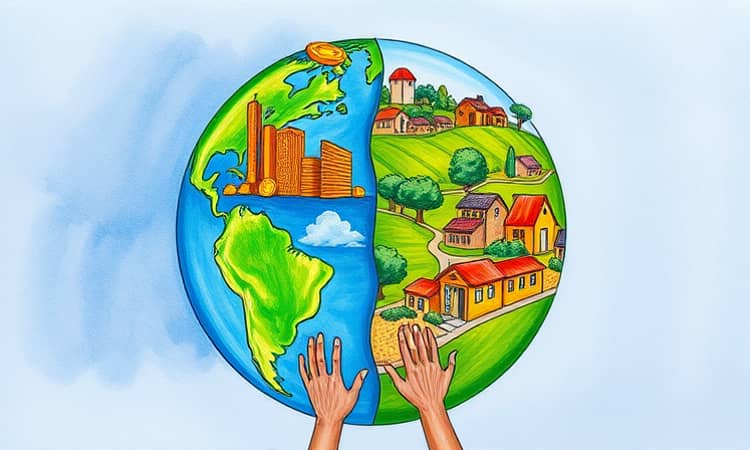
We live in an era where prosperity coexists with profound deprivation. Wealth inequality has become not only a moral concern but an urgent economic challenge that shapes our collective future.
Understanding Wealth vs Income
At its core, wealth is distinct from income flows. Income refers to the wages, dividends, and interest received over time, while wealth captures the cumulative net worth of assets minus debts. This accumulation creates a gulf hard to bridge: wealth can be inherited, invested, and compounded across generations.
Measurement tools like the Gini coefficient illustrate that wealth inequality far outpaces income inequality. A Gini score closer to 1 signifies extreme concentration. In practice, asset ownership patterns reveal top groups commanding a disproportionate share of resources.
Global Scale and Headline Numbers
Consider the stark figures: the bottom half of humanity owns less than 2 percent of global wealth, while the top 1 percent controls over one-third. The top ten percent collectively holds more than 60 percent of all assets. Meanwhile, the world’s billionaires saw their fortunes swell by two trillion dollars in a single year.
These patterns have intensified over recent decades: global wealth grew at 3.4 percent annually since 2000, with accelerated gains in developed regions. Yet, overall equality has declined, driven by surging asset prices and policy shifts favoring capital owners.
The Roots of Extreme Disparities
Wealth inequality is not an accident but the outcome of intertwined market, policy, and historical forces.
- Return on capital growing faster than wages: Ownership of stocks, real estate, and businesses yields returns that outpace average income growth, widening the asset gap.
- Policy decisions weakening redistribution: tax cuts for top earners, eroded wealth taxes, and generous deductions reinforce existing hierarchies.
- Structural legacies: colonial extraction, racial discrimination, and gender bias have long deprived marginalized groups of opportunities to accumulate assets.
Consequences of Unchecked Inequality
When wealth becomes deeply concentrated, economies lose vibrancy. Consumer demand falters as purchasing power restricts to a few. Innovation slows when talent is sidelined by lack of resources. Financial instability rises as speculative bubbles inflate in asset markets.
Social cohesion also erodes. Communities fracture under stress, trust in institutions wanes, and political polarization deepens. Health outcomes decline when large segments of society lack access to quality care, feeding a cycle of disadvantage.
Paths Toward a More Equitable Future
Reversing these trends demands bold interventions at multiple levels. Policymakers, businesses, and citizens must collaborate on systemic reforms.
- Implement progressive taxation systems that target extreme fortunes and close loopholes benefiting high-net-worth individuals.
- Strengthen labor rights: raise minimum wages, support collective bargaining, and protect gig economy workers from exploitation.
- Invest in universal education, healthcare, and affordable housing to democratize asset-building opportunities.
Fiscal reforms can redirect trillions toward public goods. For instance, a modest wealth tax in major economies could finance universal childcare, renewable energy transitions, and infrastructure in underserved regions.
Taking Action: Individual and Collective Responses
While systemic change is critical, individuals can contribute through informed choices and community engagement.
Support organizations advocating for fair taxation and corporate transparency. Participate in local budgeting processes to ensure equitable distribution of resources. Educate yourself on financial literacy and encourage others to do the same—knowledge empowers asset creation and risk management.
Ethical consumption and impact investing allow capital to be directed toward companies with inclusive employment practices and sustainable missions. Small steps—like choosing community banks, credit unions, or cooperatives—help rebuild equitable financial ecosystems.
Ultimately, true progress arises from solidarity. By lifting voices together, demanding accountability, and practicing shared prosperity, we can reshape economic structures that currently benefit a select few.
Wealth inequality is a global economic imperative that calls for vision, courage, and collective resolve. The challenge is immense, but the rewards—a fairer world, resilient economies, and stronger communities—are even greater. Each policy reformed, each institution held accountable, and each individual action taken moves us toward a future where prosperity is shared and every person can build a secure legacy.