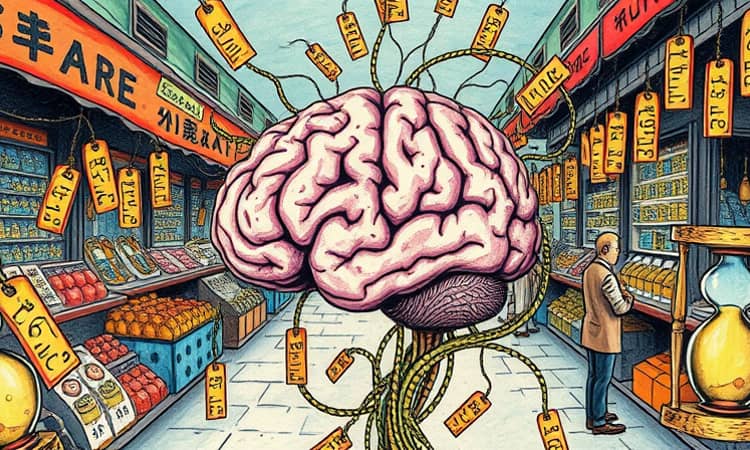
Scarcity is more than an economic principle; it is a powerful force that shapes our thoughts, emotions, and market decisions. Understanding its dual nature can transform how we design policies, build businesses, and manage our own minds.
Understanding Scarcity: Economic vs. Psychological
At its core, limited resources vs. unlimited wants defines economic scarcity. When goods or services are in short supply, marginal utility and willingness to pay rise, driving price formation and market dynamics.
Psychological scarcity, or the scarcity mindset, is a state where perceived resources do not satisfy needs, creating a pervasive feeling of “not enough.” Pioneering work by Sendhil Mullainathan and Eldar Shafir in Scarcity: Why Having Too Little Means So Much highlights how poverty and constraint intensify this mindset.
The Cognitive Toll of Scarcity
Humans have finite mental bandwidth—our attention, self-control, and planning capacity. Scarcity consumes this bandwidth and leads to a phenomenon called tunneling, where urgent deficits dominate focus at the expense of other important tasks.
Research shows that simply thinking about a costly car repair can reduce test performance equivalent to losing 13 IQ points. In field studies of Indian sugarcane farmers, participants tested before harvest, when liquidity was low, scored worse on cognitive tasks than after harvest, despite unchanged raw intelligence.
In a U.S. mall study, low-income shoppers performed as well as wealthier peers on neutral tasks, but their scores plummeted when asked to contemplate a large hypothetical expense. These findings suggest that financial worries drain mental resources every day.
Emotional Impacts and Self-Concept
Scarcity triggers negative emotions, threatening self-worth and self-esteem. Anxiety about running out of money, time, or social approval can erode a sense of meaning and control.
To protect their self-concept, people under resource threat often exhibit a stronger above-average effect. In a 2023 experiment, participants in a high scarcity condition rated themselves as significantly better than peers on positive traits (t(67)=5.54, p<0.001) and fewer negative traits (t(67)=10.62, p<0.001). This compensatory self-enhancement buffers emotional pain but can distort accurate self-assessment.
Scarcity in Markets: Demand, Pricing, and Strategy
Economic scarcity arises when availability is limited relative to demand. A scarcer product commands higher perceived value and can become less price-sensitive under FOMO, as seen with luxury goods and collectible releases.
- Limited quantity: “Only 3 left in stock” prompts urgency.
- Limited time offers: “Sale ends in 2 hours” accelerates decisions.
- Exclusive drops: Invite-only access heightens desirability.
These tactics elevate conversion rates and shift purchase timing forward, often yielding double-digit improvements in click-through and sales performance for online retailers.
Scarcity Mindset and Consumer Behavior
When money is tight, people prioritize short-term relief over long-term gain. Payday loans, rent-to-own agreements, and minimum credit card payments thrive because they offer immediate liquidity but incur heavy costs over time.
- Overborrowing from high-interest lenders.
- Opting for small immediate rewards over larger delayed ones.
- Procrastinating on non-urgent but vital tasks, such as form filling or health checkups.
Time scarcity similarly leads to rushed decisions. Consumers under time pressure may ignore better deals or skip research, settling for convenience and speed instead.
Policy and Practical Implications
Designing policies without accounting for bandwidth constraints can disproportionately harm those in scarcity. Complex applications, hidden terms, and lengthy procedures punish individuals whose mental resources are already stretched thin.
- Simplify forms and reduce decision points.
- Provide clear defaults and timely reminders.
- Design interventions that minimize cognitive load.
By acknowledging the psychology of scarcity, governments and nonprofits can improve program uptake and outcomes for vulnerable populations.
Strategies to Break the Scarcity Trap
Individuals and organizations can adopt practical measures to mitigate scarcity’s effects:
- Set aside small reserves—time or money—to buffer against unexpected demands.
- Use budgeting tools that automate planning and reduce daily mental strain.
- Foster supportive networks to share resources and relieve social isolation.
Businesses can build trust by offering transparent pricing, generous return policies, and loyalty programs that reward long-term engagement over impulse tactics alone.
Mapping Resource Types and Market Effects
A concise overview clarifies how different scarcities shape psychology and commerce:
Recognizing these patterns enables savvy policy design and market strategies that align incentives with human capacity, rather than working against it.
Scarcity is a double-edged sword: it sharpens focus but narrows vision. By blending insights from psychology and economics, we can craft environments—both personal and commercial—that harness scarcity’s power without succumbing to its pitfalls. When we alleviate needless mental burdens, we free the mind to innovate, plan, and choose wisely, unlocking value for individuals and markets alike.