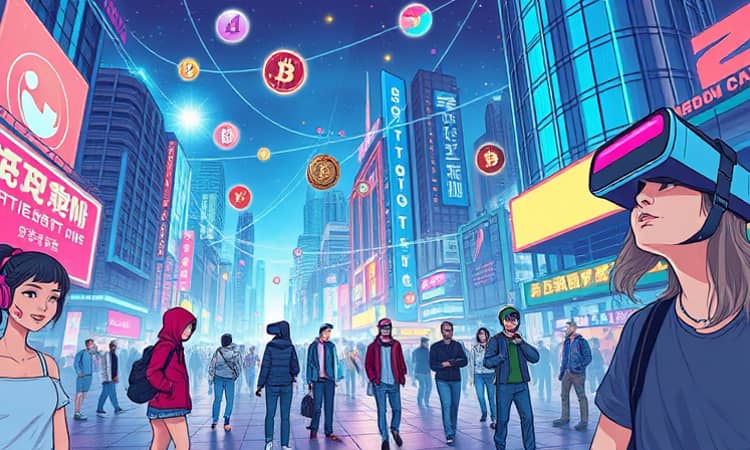
As we stand at the digital frontier, a new economic landscape is taking shape—one born from the fusion of immersive virtual reality and decentralized crypto technology. By 2030, this realm could be worth anywhere from hundreds of billions to a staggering $13 trillion. This is not mere speculation; it is the dawn of a transformative era where finance, culture, and innovation collide.
Definitions & Core Concepts
To navigate this uncharted territory, we first need clarity. The metaverse is more than a collection of VR headsets and avatars. It is a persistent, interconnected virtual environment acting as a bridge between physical and digital realities. Leading institutions define it as:
- 3D virtual shared worlds mediated by AR and VR for social and economic activities.
- A new iteration of the internet powered by blockchain, avatars, and immersive tech.
- A hybrid space where digital assets and real-world data coalesce into a native economy of trade and ownership.
Within this background, the metaverse economy emerges as all transactions, creations, and interactions occurring in these virtual realms. Its building blocks include:
- Virtual currencies like crypto tokens and in-world coins
- Digital assets such as NFTs, virtual land, and skins
- Marketplaces, brand storefronts, and creator hubs
- Smart contracts and DAOs for governance and revenue sharing
Technological Foundations: Where Crypto Meets VR
The metaverse thrives on a convergence of cutting-edge technologies. Extended reality (XR) hardware—headsets by Apple, Meta, and Sony, along with haptic gloves—provides immersive virtual worlds enabled by XR. Meanwhile, blockchain underpins the financial layer, ensuring permissionless, secure, and decentralized networks through NFTs, tokens, and smart contracts.
AI further breathes life into these realms, powering realistic NPCs, procedural content generation, and intelligent moderation. Low-latency 5G and edge computing allow thousands of participants to share a seamless experience, from virtual concerts to global conferences. Game engines like Unreal and Unity render these spaces in real time, while digital twins and IoT integrations anchor virtual cities to real-world data streams.
Market Size and Growth Projections
Current market valuations vary by definition. Under a narrow lens, the metaverse stands at $105.4 billion in 2024, growing at a CAGR of 46.4% to nearly $936.6 billion by 2030. Broader definitions—including devices, platforms, infrastructure, and peripheral services—push that ceiling to $13 trillion, potentially serving 5 billion users.
Regional dynamics further illustrate a global mosaic of growth. North America leads in investment and innovation; Europe—especially the UK and Germany—shows rapid adoption; Asia-Pacific leverages strong gaming and super-app ecosystems; and the MENA region surprises with its youthful, digitally savvy population.
Economic Mechanics & Business Models
At its heart, the metaverse functions as a network of platforms serving two-sided markets: creators and consumers. These worlds interconnect through identity standards and asset portability, forging a meta-platform of platforms. Value emerges from:
- Relaxing physical constraints to enable infinite digital replication
- Crafting experiences impossible in real life, like warp-speed concerts and AI-driven simulations
- Harvesting rich interaction data for personalized services and analytics
Key business models include:
- Experience-based offerings: virtual events, education, tourism, and branded immersive spaces
- Ownership and trade: NFT land parcels, avatar accessories, and digital collectibles
- Platform services: Metaverse-as-a-Service subscriptions and revenue-sharing ecosystems
- Creator economies: user-generated assets, mini-games, and avatar-driven commerce
Crypto, Tokens, and NFTs: The Bridge to Ownership
Cryptocurrency serves as the metaverse’s circulatory system, facilitating secure, efficient transactions across borders and platforms. Smart contracts automate royalties, enforce secondary-sale revenue, and manage complex in-world economics such as virtual loans and collateralization.
NFTs represent the cornerstone of digital property rights. They verify provenance and scarcity for virtual land, wearables, art, and event passes. With over $2 billion in NFT-based real estate traded by 2024, this phenomenon underscores both speculative fervor and genuine investment potential.
Moreover, DeFi protocols are weaving into these virtual worlds, enabling lending, staking, and yield-bearing opportunities on tokenized assets. DAOs establish democratic governance models for districts, platforms, and creative collectives, distributing decision-making among stakeholders.
Preparing for the Future: Opportunities and Challenges
The metaverse economy promises boundless opportunities for entrepreneurs, artists, and global communities. Brands can forge unprecedented engagement through virtual storefronts, educators can revolutionize training with immersive simulations, and creators can monetize ingenuity anywhere on the planet.
Yet with these prospects come challenges. Interoperability standards remain nascent, and regulatory frameworks for digital assets are still evolving. Privacy concerns, cybersecurity threats, and the risk of economic speculation call for robust governance and ethical considerations.
To thrive in this landscape, stakeholders must collaborate on:
- Open standards for identity, asset exchange, and data portability
- Transparent governance models balancing innovation with consumer protection
- Inclusive design principles ensuring accessibility and diversity
Ultimately, the metaverse economy is more than a futuristic buzzword. It is a profound shift in how we live, work, and connect. By embracing both the awe-inspiring potential of immersive worlds and the trust-enhancing capabilities of blockchain, we can build a digital ecosystem that uplifts humanity, drives sustainable prosperity, and redefines the meaning of reality itself.