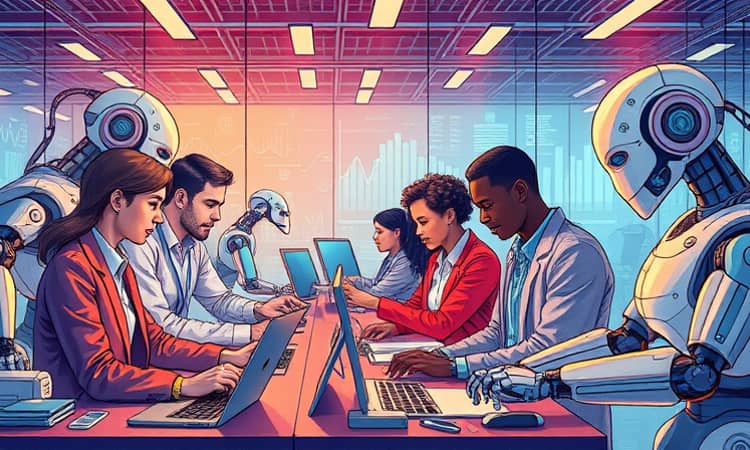
In an era defined by rapid technological change, the rise of automation and artificial intelligence invites both awe and apprehension. From factory floors to corporate offices, machines and algorithms are reshaping the nature of work. Headlines often trumpet looming job losses or celebrate productivity gains, but the true story is far more nuanced. As automation permeates industries at unprecedented scale, it offers an opportunity to unlock new forms of prosperity—if societies can navigate the challenges of displacement and inequality.
At stake is nothing less than the livelihoods of billions and the structure of the global economy. By examining data from leading research institutions and real-world case studies, we can chart a path toward harnessing innovation while safeguarding human potential. This article explores the complex interplay between labor, technology, and policy, providing practical insights to guide workers, businesses, and governments through this pivotal transition.
Automation at Unprecedented Scale
Recent analyses suggest that automation and AI possess the technical potential to perform 60–70% of today’s work hours worldwide. If widely adopted, existing automation technologies could affect 1.2 billion workers and $14.6 trillion in wages, roughly half of the global economy. Generative AI alone may replace or transform an estimated 300 million full-time jobs globally, representing about 9.1% of positions today.
Yet the narrative of mass unemployment overlooks the simultaneous creation of new roles and industries. The World Economic Forum projects that between 2025 and 2030, businesses will generate jobs equal to 14% of current employment, or roughly 170 million positions. Conversely, 92 million roles may be displaced, yielding a net increase of about 78 million jobs.
This dynamic underscores the tension between headline job losses and longer-term growth. Adoption rates will vary across regions and sectors, shaped by investment costs, regulatory environments, and societal attitudes toward automation.
Displacement, Retraining, and New Horizons
By 2030, as many as 92 million roles could be displaced by automation, and 14% of workers may need to change careers. In manufacturing alone, 20 million jobs could be replaced by robots and automated tools. Since 2000, automation has already eliminated 1.7 million U.S. manufacturing jobs, illustrating the pace and scale of transformation.
In the United States, up to 30% of current jobs could be fully automated by 2030, while 60% of roles will experience significant task-level changes. Nearly 47% of U.S. workers may see their positions come under threat from automation over the coming decade, and about 19.2 million jobs are at high risk in the near term.
- 92 million roles globally displaced by 2030
- 300 million jobs potentially transformed worldwide
- 20 million U.S. manufacturing jobs at risk
- 1.7 million U.S. manufacturing positions lost since 2000
However, displacement also drives innovation in training and education. Countries and companies are investing in comprehensive reskilling and upskilling programs to equip workers for emerging fields, from AI oversight to advanced manufacturing and green technologies.
Sectoral Shifts: Who Wins and Who Loses
Not all sectors face equal exposure. Routine and clerical roles, such as data entry and administrative support, are most vulnerable. The WEF estimates that over 7.5 million data entry jobs will vanish by 2027, and occupations like medical transcriptionists and customer service representatives are projected to decline by 4.7% and 5.0%, respectively, between 2023 and 2033.
Manufacturing tells a mixed story. Historical waves of industrial robots initially depressed wages and localized employment before giving way to new roles in robot maintenance, systems integration, and advanced engineering. In developing East Asia and the Pacific, robot adoption between 2018 and 2022 helped create 2 million skilled formal jobs while displacing 1.4 million low-skilled positions.
Agriculture, often mechanized for decades, shows that productivity gains can coexist with stable employment levels when workers move to higher-wage industries. As rural incomes rise, labor naturally shifts toward services and manufacturing, underscoring the importance of holistic economic development.
- Routine clerical work faces steep declines
- Manufacturing evolves with robot maintenance roles
- Agricultural employment remains resilient
- High-skill knowledge work adapts and grows
High-wage professional roles, surprisingly, exhibit the greatest AI exposure. Yet when AI automates selective tasks, it often amplifies demand for human creativity, judgment, and interpersonal skills. Firms that embrace AI extensively report 6% higher employment growth and 9.5% greater sales growth over five years compared to their peers.
Productivity, Growth, and Wages
Generative AI could boost labor productivity by roughly 15% in developed economies, according to Goldman Sachs. While this shift may temporarily nudge the unemployment rate up by 0.5 percentage points, it is unlikely to precipitate lasting jobless upheavals. Instead, higher output and lower costs tend to fuel new sectors and consumer demand.
At the firm level, research from MIT Sloan reveals that companies heavily leveraging AI are larger, more productive, and pay higher wages. Over a five-year horizon, these organizations enjoy stronger sales and hire additional staff to manage emergent opportunities, rather than shed workers in the face of disruption.
The broader effect on wages is complex. Automation can compress routine tasks, reducing wage growth for certain roles, but it also raises demand—and pay—for higher-value skills. As economies transition, policy frameworks will play a critical role in ensuring that gains from automation are widely shared, rather than concentrated among a select few.
Charting a Balanced Path Forward
To steer the automation revolution toward inclusive prosperity, stakeholders must collaborate on policies and programs that anticipate change. This includes expanding lifelong learning platforms and strengthening social safety nets to cushion transitions. Governments can incentivize firms to invest in human capital, while educational institutions update curricula for digital-era competencies.
- Develop robust retraining initiatives
- Implement adaptive social safety programs
- Encourage public-private partnerships
- Promote equitable access to technology
Ultimately, the narrative of robots versus humans is a false dichotomy. Automation can be harnessed as a force multiplier for human capability—freeing people from mundane tasks and unleashing creativity. By planning proactively, we can ensure that the coming wave of innovation delivers both technological advancement and shared well-being.
The journey ahead demands thoughtful leadership and collective commitment, but the rewards—a more dynamic economy, richer lives, and new frontiers of human achievement—beckon with promise.