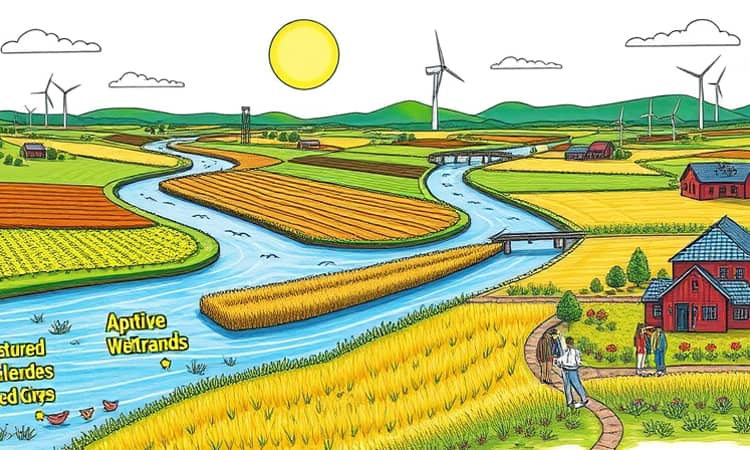
In a world of growing uncertainty, the ability to endure, adapt, and thrive is more critical than ever. Resource resilience stands at the intersection of ecology, society, and economy, guiding us toward solutions that preserve essential services under shocks and long-term environmental change. This article explores the core concepts that underpin resilience, examines the environmental shifts demanding urgent action, assesses challenges and responses across vital resource sectors, and highlights cross-cutting strategies and policies to build a more resilient future.
Core Concepts and Definitions
At its heart, resource resilience is the capacity of critical natural and human systems to continue providing essential services despite disturbances. This broad concept includes water supplies, food production, energy delivery, ecosystem functions, and supply chains. While climate resilience emphasizes anticipating, adapting, and thriving amid disasters, resource resilience focuses on the capacity of essential systems to endure disruptions and maintain core functions that support wellbeing.
Understanding the distinction between adaptation and resilience is vital. Adaptation refers to specific processes or actions—such as building seawalls, developing drought-tolerant crops, or updating irrigation practices—that alter systems to survive new conditions. By contrast, resilience describes the overall ability of intertwined ecological, social, and economic networks to absorb shocks, recover quickly, and learn from change.
Ecological resilience examines how ecosystems maintain normal nutrient cycling and biomass production after disturbances. Biodiversity and functional diversity are key, as they allow species or roles within an ecosystem to shift while preserving overall structure. Community resilience focuses on the capacity of human groups to prepare for, respond to, and learn from climate-exacerbated disasters, supported by health, equity, robust infrastructure, and coordinated planning. Economic resilience ensures regions withstand economic shocks while maintaining diverse livelihoods and equitable resource access.
Main Environmental Shifts Driving Resilience
A series of interlinked environmental changes has elevated resource resilience to a global priority. These shifts often compound one another, creating scenarios where multiple sectors are stressed simultaneously.
- Rising temperatures and altered precipitation patterns lead to more frequent heatwaves, shifting growing seasons, and reduced snowpack.
- Intensifying extreme weather events—floods, droughts, storms, and wildfires—strain natural and built systems alike.
- Sea level rise and coastal change threaten freshwater aquifers, infrastructure, ecosystems, and human settlements.
- Ecosystem degradation and biodiversity loss undermine the reliability of services like pollination, water purification, and soil fertility.
- Resource depletion and supply disruptions—water scarcity, soil degradation, deforestation, and critical materials shortages—drive the need for circularity and diversification.
Such compound risks require holistic, systems-oriented approaches that strengthen physical, ecological, social, and financial capacities across scales.
Critical Resource Systems
Resource resilience manifests differently across sectors, each facing unique stressors and crafting tailored responses. Collaboration between communities, governments, businesses, and scientists is essential to develop robust, context-specific solutions.
Water Resources: Altered precipitation, earlier snowmelt, and rising temperatures change water availability and flood regimes. Watershed restoration, riparian buffers, and wetland protection enhance filtration and flood mitigation. Drought planning, demand management, and rainwater harvesting diversify water sources. Nature-based flood management—such as floodplain reconnection—combines engineering with ecosystem services to protect communities and habitats.
Food and Agriculture: Changing weather patterns, extreme events, pests, and diseases disrupt yields, particularly for staple crops. Integrated land and resource management—including agroforestry, cover crops, and reduced tillage—builds soil health and carbon storage. Crop diversification and climate-smart agriculture spread risk, while regional food systems and shorter supply chains reduce vulnerability to global market shocks.
Energy Systems: Heatwaves strain power grids, storms damage transmission lines, and water constraints limit hydropower and cooling for thermal plants. Diversifying and expanding renewable resources, paired with energy storage and advanced grid controls, enhances reliability. Hardening infrastructure—relocating substations away from floodplains—and deploying distributed energy resources like microgrids and rooftop solar ensure critical services remain online during outages.
Infrastructure and the Built Environment: Roads, bridges, wastewater plants, and communication networks face flooding, sea level rise, and extreme heat. Updating design standards and building codes to reflect projected climate extremes is vital. Retrofitting or relocating critical assets away from high-risk zones, combined with green infrastructure—urban trees, permeable pavements, bioswales—mitigates heat islands and manages stormwater naturally.
Ecosystems and Biodiversity: Healthy ecosystems provide regulating services—flood mitigation, climate regulation, water purification—that buffer human communities against shocks. Conservation, habitat restoration, and biodiversity protection maintain ecosystem integrity. Ecosystem-based management, integrating traditional knowledge and ecological principles, supports soil health, carbon sequestration, and sustainable forestry or agriculture. Preventing regime shifts—such as lakes becoming eutrophic or forests converting to grasslands—is critical to sustaining long-term resilience.
Urban Systems and Communities: Cities grapple with heat islands, poor air quality, stormwater flooding, and social inequalities that exacerbate vulnerability. Inclusive urban planning—compact development, safe and affordable housing, accessible transportation—strengthens social networks and reduces exposure. Community engagement and environmental justice ensure resilience measures are culturally appropriate and equitable. Strengthening health systems, emergency preparedness, and risk communication builds trust and capacity at the local level.
Strategies and Policies for Building Resilience
Effective resilience requires a blend of incremental measures and transformative shifts, supported by policy frameworks, finance mechanisms, and participatory governance. Decision-makers must balance short-term fixes with long-term system redesign.
Cross-cutting strategies often include:
- Integrating resilience into planning and design: Embedding climate projections and risk assessments into infrastructure codes, watershed management plans, and urban development guidelines.
- Enhancing finance and incentives: Leveraging public and private investment, insurance innovations, and payment for ecosystem services to reward resilience-building actions.
- Promoting collaborative governance: Fostering partnerships among governments, communities, businesses, and researchers to share knowledge and coordinate responses.
- Building social capital: Strengthening community networks, education, and local leadership to ensure adaptive response capacity at the grassroots level.
Policy frameworks—national adaptation plans, climate-smart regulations, and resilient development standards—provide the scaffolding for coordinated action. Integrating resilience into budgets, investment decisions, and performance metrics ensures accountability and continuous improvement.
Ultimately, resource resilience is not a destination but a journey. It calls for an ongoing commitment to learning, innovation, and equity. By understanding the core principles of resilience, recognizing the environmental shifts we face, addressing sector-specific challenges, and embracing cross-cutting policies, societies can forge a path that safeguards both people and the planet.
The journey toward resilience demands bold vision, collaborative spirit, and practical action. Our collective future hinges on the choices we make today to anticipate change, absorb shocks, and adapt boldly—ensuring that critical systems continue to sustain life and livelihoods for generations to come.