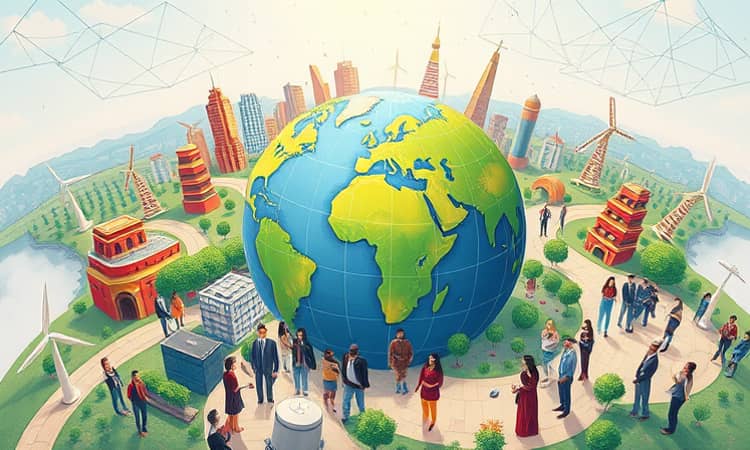
In an era of unprecedented uncertainty, the concept of resilience is evolving beyond simple recovery. Today’s economies are learning to thrive by transforming adversity into opportunity.
From pandemics to trade disputes and climate disruptions, global challenges have prompted a fundamental rethink of what makes an economy truly durable. In this article, we explore how countries and regions are absorbing shocks and transforming economies by adopting more sustainable, inclusive and technology-driven models.
1. The New Landscape of Global Growth
After a series of unexpected shocks—tariffs, wars, climate extremes and financial tightening—the global economy has shown surprising resilience. Leading institutions now forecast moderate growth, reflecting both the lingering effects of front-loaded stimulus and the early stages of structural change.
Key projections for 2025 and 2026:
While forecasts differ slightly, the consensus describes a world that is resilient but fragile, balancing growth opportunities against lingering vulnerabilities.
2. From Recovery to Transformation
Traditional definitions of resilience focused on “bouncing back” after a shock. Yet modern theory embraces a broader vision: structural transformation that reduces future risks and creates new growth pathways.
UNCTAD’s latest report argues that resilience today demands the capacity to absorb, adapt and transform. This multi-dimensional approach spans economic, social, environmental and institutional domains.
3. Multi-Dimensional Pillars of Resilience
Building stronger, more durable economies requires coordinated action across several key fronts:
- Economic diversification and robustness through diversified production and trade
- Social inclusion, reducing inequality and ensuring inclusive labor markets and protections
- Environmental safeguards via climate-resilient infrastructure and low-carbon transitions
- Institutional reliability, transparent rules and stronger international cooperation
- Technology adoption and digital connectivity as engines of innovation
4. Evidence of Evolving Resilience
Contrary to fears of a synchronized downturn, many advanced economies avoided recessions in early 2025. Corporate balance sheets remained solid, credit spreads tight, and equity valuations near record highs.
Trade tensions and new tariffs failed to derail merchandise volumes, which rose 5.3% year-over-year in Q1 2025. Companies’ strategic front-loading of imports and investments cushioned the shock and even accelerated growth in some sectors.
Household balance sheets, supported by steady wage gains, sustained consumption. Across regions, policymakers deployed timely measures that not only stabilized activity, but using them to shift toward greener, smarter industries.
5. Regional Snapshots of Adaptation
Different economies showcase how resilience can be tailored to local strengths and challenges. Here are illustrative examples:
- United States: Forecast growth of 1.6% in 2025, powered by AI investment surges and supply-chain reconfiguration.
- Euro Area: Growth near 1.3%, bolstered by NextGenerationEU spending and rising defense budgets.
- China: On track for 5% official growth, with strong exports to Asia and robust policy firepower.
- Emerging Markets: Facing tighter financing and climate risks, but opportunities in digital leapfrogging and regional integration.
These snapshots underline a common theme: resilience redefined is more than recovery—it is proactive transformation.
6. Key Drivers of the New Resilience
Several forces are reshaping the global economy’s ability to withstand and grow from shocks:
- Policy innovation: Coordinated monetary easing and targeted fiscal support cushion downturns while investing in future capabilities.
- Technological diffusion: AI, automation and digital platforms boost productivity and enable new business models.
- Supply-chain diversification: Firms reduce concentration risks by expanding sourcing across regions.
- Green transition: Investments in clean energy and sustainable infrastructure create jobs and mitigate climate shocks.
7. Policy Responses That Enable Change
Central banks in major economies have begun to ease rates as inflation moderates, creating space for governments to invest. Fiscal packages in the US emphasize AI and semiconductor manufacturing, while Europe channels funds into defense, digitalization and green industries.
Emerging and developing countries are calling for new frameworks to address debt vulnerabilities and secure development finance. Strengthening multilateral institutions is critical to enabling coordinated responses and resource flows.
8. Technology and Sustainability in Focus
Digital adoption has emerged as a powerful resilience tool. Countries with advanced digital infrastructure quickly pivoted to remote work, e-commerce and telemedicine during crises. Now, expanding broadband, data centers and fintech access is a strategic priority.
At the same time, climate shocks underscore the urgency of green transitions. From solar arrays in deserts to resilient ports and flood defenses, infrastructure investments reduce future damages and generate economic opportunities.
9. Building Inclusive Foundations
Long-term resilience depends on social cohesion. Inclusive policies—expanding social protection, retraining workers and investing in health and education—ensure that growth is broad-based and sustainable.
Inequality can undermine demand and spur social unrest. By prioritizing fair labor standards and targeted support, governments can foster stable, consumer-driven growth engines.
10. A Call to Collective Action
No single country can secure global resilience alone. Strengthening international cooperation, reforming trade rules and investing in shared research and development are essential steps.
As shocks become more frequent and interconnected, a proactive mindset—focusing on adaptation and transformation—will determine which economies lead in the decades ahead.
Conclusion
Resilience today is not about reverting to old ways; it is about building technology-enabled growth models that are inclusive, diversified and green. By embracing structural transformation, economies can turn shocks into catalysts for lasting progress.
The path ahead requires bold policies, private sector innovation and international solidarity. Together, we can redefine resilience and secure a stronger, more equitable global economy for future generations.