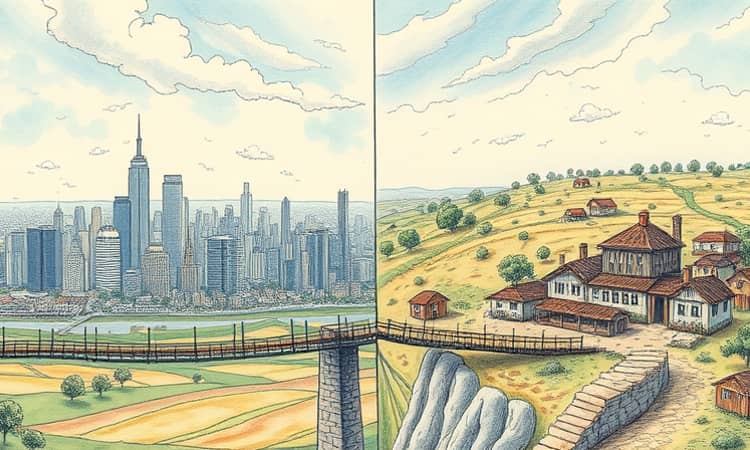
In an age of unprecedented wealth and technological breakthroughs, the persistence of extreme poverty poses a profound moral and economic dilemma.
Big Picture: Growth vs. Persistent Poverty
Since 1990, global output and average incomes have surged, fueled by the rapid expansion of markets in nations like China and India, commodity booms in Africa and Latin America, and the rise of service economies worldwide. Yet, despite these gains, roughly one in ten people globally still live on less than $3.00 per day.
In 1990, approximately 2.31 billion people endured extreme poverty. By 2022, that number had fallen to 838 million under the revised poverty line, and projections for 2025 place it near 808 million. While roughly 1.5 billion individuals escaped poverty between 1990 and 2022, the downward pace has slowed dramatically.
The years 2014 to 2019 saw the slowest annual decline in three decades. Then came the COVID-19 shock, which reversed years of progress and added nearly 50 million more people to the ranks of the extremely poor. This juxtaposition of rapid growth on one hand and lingering hardship on the other defines the enduring paradox of our time.
Rethinking Poverty: Measurement Matters
Our understanding of poverty hinges on its definition. In June 2025, the World Bank raised the international extreme poverty line from $2.15 (2017 PPP) to $3.00 (2021 PPP). This adjustment reflects updated price data across 160 countries and revision of national benchmarks, offering a more realistic portrayal of deprivation.
Under the new benchmark, the global extreme poverty rate in 2022 rose from 9.0% to 10.5%, revealing that many individuals previously counted above the old line still faced profound scarcity. This exemplifies how definitions shape our view of success and failure in the fight against poverty.
Multidimensional Poverty: Beyond Income
Monetary measures tell only part of the story. The Global Multidimensional Poverty Index (MPI) considers health, education, and living standards. It finds that out of 6.3 billion people in covered countries, 1.1 billion suffer from acute multidimensional poverty.
- Lack of clean cooking fuel
- Inadequate housing and sanitation
- Undernutrition and poor health
- Absence of electricity and school attendance
More than half of the MPI poor are children, illustrating how non-income deprivations can persist even as average incomes rise. Addressing these gaps demands holistic policies that pair income support with investments in services and infrastructure.
Regional Disparities: Uneven Progress
Poverty reduction has been extremely uneven. Sub-Saharan Africa now hosts nearly half of the world’s extremely poor. Under the new line, the region’s poverty rate jumped from 37.0% to 45.5% in 2022. Western and Central Africa alone added 15.6 million people living under $3 per day.
By contrast, South Asia’s poverty rate fell from 9.7% to 7.3% under the revision. The region contributed the most to global poverty declines between 2022 and 2025. Meanwhile, the Middle East and North Africa saw poverty rates climb from 8.5% to 9.4%, driven by conflict and economic fragility.
- Sub-Saharan Africa: 46.0% in 2024
- South Asia: 7.3% in 2022
- MENA: 9.4% in 2025 (projected)
High-poverty countries like South Sudan, Somalia, and Madagascar illustrate how conflict, weak governance, and inequality compound the challenges of last-mile poverty reduction.
Stalled SDG1: Roadblocks to Eradication
The United Nations Sustainable Development Goal 1 aims to end poverty in all its forms by 2030. Yet, current trajectories render this objective highly unlikely to end poverty within the decade. Key obstacles include:
- Slow recovery from the COVID-19 pandemic
- Economic instability and debt crises
- Climate shocks and environmental degradation
- Uneven growth in the world’s poorest regions
Without structural changes—combining inclusive growth and social protection with climate resilience—global progress will falter, and the most vulnerable populations will remain behind.
Strategies for Change: Paths Forward
The paradox of growth alongside entrenched poverty demands bold, integrated solutions. Governments, civil society, and the private sector can pursue several complementary strategies:
- Raise public investment in health, education, and infrastructure, targeting underserved areas.
- Expand social protection systems—cash transfers, unemployment insurance, and pensions—to cushion against shocks.
- Foster inclusive economic policies that support smallholder agriculture, micro-entrepreneurship, and formalization of informal work.
- Strengthen climate adaptation measures—early warning systems, resilient agriculture, and disaster risk financing.
- Promote partnerships between governments, NGOs, and private firms to mobilize resources and innovation.
Above all, success hinges on empowering local communities, amplifying the voices of those with lived experience of poverty, and ensuring they participate in designing solutions.
A Call to Collective Action
The era of booming global GDP makes our failure to reach the poorest all the more jarring. Yet, it also presents a moral imperative: technological capacity, scientific breakthroughs, and unprecedented resources mean that poverty eradication is within reach.
By rethinking poverty measurements, closing regional gaps, and scaling up holistic policies, we can transform the paradox into progress. Every policy choice, every philanthropic initiative, and every investment in human capital can tilt the balance in favor of equity and dignity.
Our collective task is clear: to ensure that no community is left behind as the world grows richer. That is the true test of our era—turning economic miracles into shared opportunity.