As global trade patterns shift under geopolitical pressures, climate policy and technological advances, the modern “New Silk Road” emerges as a tapestry of railroads, ports and digital links. This article charts the evolving contours of the Belt and Road Initiative and its wider impact.
Understanding the New Silk Road
Launched by President Xi Jinping in 2013, the Belt and Road Initiative (BRI) comprises two complementary pillars: the Silk Road Economic Belt and the 21st Century Maritime Silk Road. Together they form a China-centered network of infrastructure stretching from Asia to Europe, Africa and beyond. Enshrined in the Chinese Communist Party constitution in 2017, BRI’s official goals—policy coordination, facilities connectivity, unimpeded trade, financial integration and people-to-people bonds—drive a strategic push to reshape global commerce.
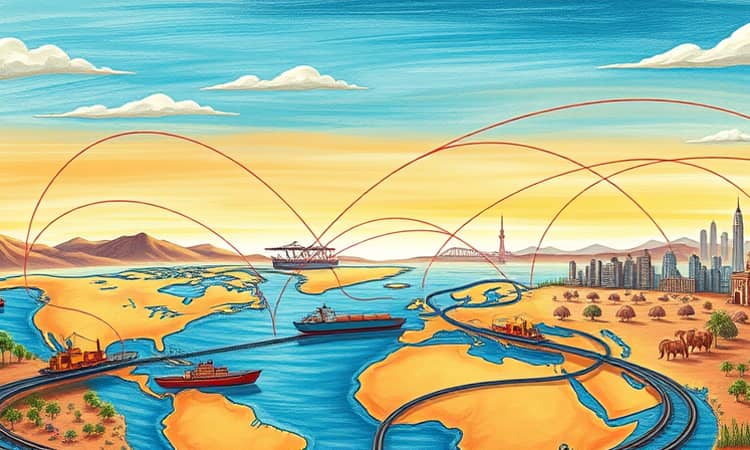
Framed as one of the most ambitious infrastructure projects ever conceived, the New Silk Road extends far beyond rail lines and ports. It encompasses digital corridors, energy pipelines and logistics hubs designed to bind participating nations into a new trading architecture.
Geographic Scope and Participation
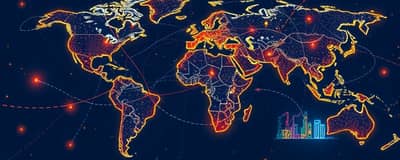
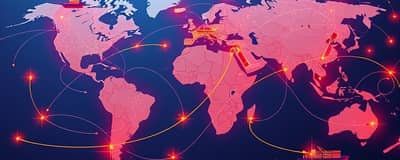
Today, the BRI touches between 70 and 150 countries across Eurasia, Africa, Oceania and Latin America, depending on the definition. Its overland and maritime corridors diversify traditional chokepoints like the Malacca Strait and Suez Canal, offering alternative routes and reducing dependencies.
- China–Central Asia–Europe rail corridors via Kazakhstan, Russia, Belarus and Poland
- China–Pakistan Economic Corridor (CPEC) linking Xinjiang to the Gwadar port
- Equity stakes in Mediterranean ports such as Piraeus (Greece) and Valencia (Spain)
- Maritime hubs across Southeast Asia, East Africa, the Middle East and South Asia
By weaving together these arteries of trade, China and partner states aim to create more secure, diversified trade routes and foster economic integration on an unprecedented scale.
Economic Transformations and Trade Shifts
Over the past two decades, China’s role in global exports exploded from just over 5% around 2000 (approximately USD 500 billion) to roughly 15% today (USD 3.5 trillion). Equally notable is the rise of BRI markets: their share of China’s exports climbed from 20% to over 40%, accounting for nearly half of export growth in the last decade.
Key BRI destinations such as Vietnam (now responsible for 7.8% of China’s export growth), the UAE, Thailand, Indonesia and several African and Latin American nations have emerged as vital markets. This re-orientation away from heavy reliance on the US and EU signals a shift toward a more diversified export base.
Research demonstrates that infrastructure investment under BRI lowers transport costs, stimulates trade flows and fosters agglomeration economies in manufacturing. Yet these gains coexist with concerns over debt dependency and the uneven distribution of benefits.
Strategic Dimensions and Geopolitical Rivalries
Beyond economics, the New Silk Road serves as a geopolitical hedge. Control of vital maritime chokepoints, especially the Malacca Strait, exposes China to US naval power. By forging new land and sea corridors, Beijing seeks to reduce strategic vulnerabilities and assert influence over global supply chains.
State-owned enterprises like COSCO Shipping and China Merchants Port hold stakes in pivotal ports, enhancing China’s leverage over container flows, logistics and even surveillance. Critics warn of weaponized interdependence, where ownership of infrastructure becomes a tool of statecraft.
In response to BRI’s expansion, the US and its allies have implemented export controls on advanced technology, launched rival initiatives such as the G7 Partnership for Global Infrastructure and Investment, and lobbied countries like Panama to reconsider their participation. China's retaliatory measures, including restrictions on rare-earth mineral exports, underscore the intertwining of trade policy and strategic rivalry.
Supply Chains in Flux: De-risking and Dual Circuits
The COVID-19 pandemic highlighted vulnerabilities in just-in-time production and global logistics. According to KPMG’s 2025 report, 74% of manufacturers cite geopolitical complexity as a top challenge. As a result, many firms pursue near-shoring, on-shoring or a “China-plus-one” strategy to mitigate risk.
- Reducing exposure to tariffs, sanctions and logistical disruptions
- Diversifying production bases to Vietnam, Mexico and Eastern Europe
- Balancing reliance on Chinese-owned infrastructure with alternate supply lines
These shifts intersect with BRI: some corridors gain as companies move into partner countries, while others face skepticism over Chinese control. The result is a dual-circuit system, where trade flows and sourcing decisions reflect both opportunity and caution.
Fragmentation of global supply chains—driven by politics, technology restrictions and environmental mandates—is reshaping commercial networks. BRI corridors that once promised seamless integration now navigate a landscape of competing blocs and conditional alliances.
Charting a Resilient Future
As global trade architecture fractures and reconfigures, stakeholders must adopt adaptive strategies. Nations and businesses should:
- Invest in diversified logistics and digital connectivity
- Forge multilateral partnerships to share risk and resources
- Prioritize sustainable infrastructure and transparent financing
By balancing engagement with BRI initiatives and pursuing alternative routes, actors can build resilience against shocks—be they geopolitical tensions, climate events or supply-chain disruptions.
Ultimately, navigating the New Silk Road demands a nuanced understanding of its economic promise, strategic undercurrents and the evolving rules that govern 21st-century trade. Embracing both opportunity and vigilance will be key to thriving in a world where commerce and geopolitics are inseparable.