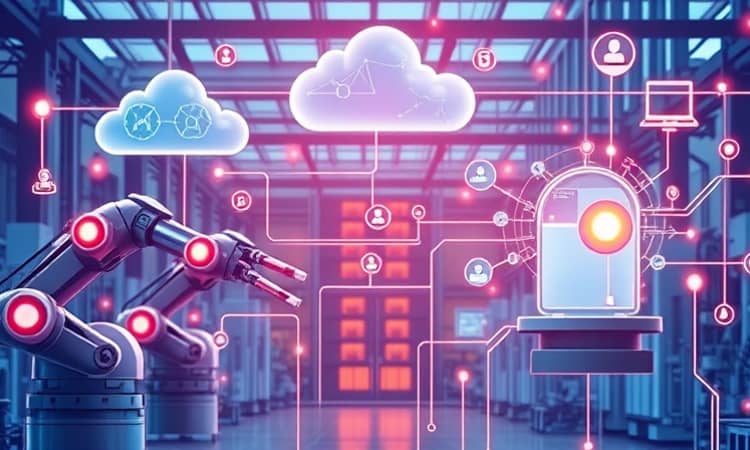
In an era of rapid innovation, manufacturing is evolving beyond traditional production models. This metamorphosis harnesses advanced technologies and data-driven approaches that redefine how products are designed, built, and serviced throughout their lifecycle. As digital and physical realms converge, factories become nodes in a broader ecosystem where value emerges from software, services, and collaboration across global networks.
From Asset-Heavy Plants to Intelligent Networks
The journey from Industry 3.0 to 4.0 and beyond represents a radical shift. Manufacturers no longer view factories as isolated centers of production but as part of a networked platform where value extends into design studios, logistics chains, and customer touchpoints. This transformation transcends mere automation—it reimagines business models, customer relationships, and workforce roles in pursuit of agility and sustainability.
By breaking down silos, companies enable a continuous flow of data that informs every decision, from initial concept to product retirement. Digital threads weave together disparate systems, allowing engineers, operators, and service teams to collaborate in real time. This unified data infrastructure is the backbone of a service-centric and outcome-driven industry.
Key Pillars of the Digital Ecosystem
Several technologies underpin this new manufacturing paradigm. Each pillar contributes unique capabilities that collectively propel transformation beyond the factory floor:
- Internet of Things (IoT): Real-time sensor data for monitoring, analytics, and remote control.
- Artificial Intelligence (AI) and Machine Learning: Pattern recognition for forecasting, process optimization, and decision support.
- Automation and Robotics: Automated systems for repetitive tasks, enhancing safety and efficiency.
Let's explore their impact in detail and examine how organizations can harness these technologies to unlock new sources of value.
IoT networks feed massive volumes of performance data into AI engines. Through predictive maintenance and quality control, anomalies are detected before they escalate, preventing costly downtime. Manufacturers report up to 30% reductions in unplanned stoppages and 20% lower maintenance expenses after deploying these solutions.
Cloud computing provides elastic infrastructure for data storage and analytics, while edge computing processes critical information close to the machines. This combination delivers low-latency control loops and scalable intelligence across global operations.
Digital twins create virtual replicas of assets, production lines, or entire facilities. Engineers simulate scenarios from process changes to maintenance strategies, refining configurations without disrupting real-world operations. Results include up to 25% faster time to resolution for equipment issues and significant drops in scrap rates.
Strategic Business Outcomes
Transformation extends well beyond technology deployment. When applied holistically, these digital capabilities generate tangible benefits across multiple dimensions:
- Cost Efficiency: Through reduced unplanned downtime costs and waste minimization, companies achieve substantial savings.
- Quality Assurance: Real-time analytics detect defects early, improving product consistency and brand reputation.
- Supply Chain Agility: Integrated planning enables agile and resilient supply chains that respond quickly to disruptions.
Manufacturers leveraging digital strategies report 10–30% improvements in productivity metrics and up to 20% reductions in operational expenses. By shifting to servitization, they move from one-time sales toward recurring revenue streams tied to uptime, performance, and outcomes.
For example, a heavy equipment maker implemented an AI-driven maintenance platform, cutting service call frequency by 25% and boosting customer satisfaction scores by 18%. Meanwhile, an automotive supplier adopted cloud-based collaboration tools that accelerated prototyping cycles by 40%, driving new product launches several months ahead of schedule.
Transformation Types: Beyond Processes and Products
Successful metamorphosis requires more than point solutions. It encompasses five interwoven transformation types:
- Process Transformation: Redesign core procedures for efficiency at every stage.
- Business Model Transformation: Embrace an outcome-based business model shift with subscription services and performance guarantees.
- Product & Service Innovation: Develop optimized energy consumption and materials strategies with smart, connected products.
- Supply Chain & Ecosystem Evolution: Extend digital threads upstream to suppliers and downstream to customers.
- Workforce & Cultural Change: Cultivate digital skills and agile mindsets across teams.
Each dimension contributes to a resilient architecture that weaves data, software, and human expertise into a cohesive fabric of value creation.
New Frontiers: Upstream and Downstream Value Nodes
Value now emerges at every link in the extended manufacturing chain. Upstream, digital twins and collaborative platforms enable global engineering teams to co-create designs, validate manufacturability, and optimize for serviceability before cutting metal. This accelerated time to market slashes development costs and captures early revenues.
Downstream, servitized offerings—ranging from performance monitoring to on-demand spare parts—transform the post-sale experience. Customers gain access to tailored uptime guarantees, predictive support, and seamless upgrades. As a result, manufacturers deepen relationships and unlock additional revenue streams over the product lifecycle.
Organizational Implications and Workforce Evolution
Digital metamorphosis reshapes roles and skills. Routine tasks are automated, freeing employees to engage in high-value activities like data analysis, process innovation, and customer engagement. To thrive, organizations invest in upskilling programs and foster cultures of continuous learning and cross-functional collaboration.
Leaders adopt agile governance models, creating multidisciplinary teams charged with rapid experimentation and iterative deployment. Success hinges on empowering individuals to act as digital champions, bridging the gap between technology and business outcomes.
Embracing the Full Metamorphosis
Manufacturing’s metamorphosis extends well beyond factory gates. It redefines how products are conceived, produced, serviced, and retired. By integrating IoT, AI, automation, and advanced analytics into a unified digital ecosystem, organizations unlock unprecedented transparency, agility, and profitability.
As the industry advances toward Industry 5.0, human creativity and machine intelligence converge, forging sustainable, resilient, and customer-centric value networks. Companies that embrace this holistic transformation not only survive disruptions but shape the future of manufacturing itself, proving that the true power of digital lies in its capacity to connect, adapt, and innovate.