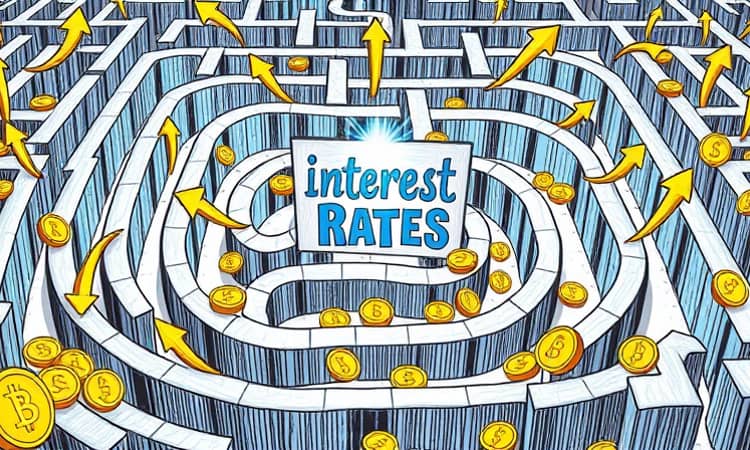
In today’s financial landscape, interest rates can feel like an intricate maze, full of twists, turns, and unexpected dead ends. As policymakers adjust rates in response to inflationary pressures and growth prospects, households and investors alike must chart a course through shifting terrain. This article provides a detailed guide to understanding current U.S. rates, the Federal Reserve’s strategy, and practical steps to navigate evolving borrowing costs.
From the Federal Reserve’s policy decisions to mortgage market forecasts, we’ll unpack each element of this economic labyrinth. By the end, you’ll have clear insights into rate dynamics and actionable advice for planning your next financial move.
Navigating the Current Policy Landscape
The Federal Reserve’s primary tool is the federal funds rate, currently set at a target range of 3.75–4.00%, following 25 basis-point cuts in both September and October 2025. This level marks the lowest level since 2022 after an extended tightening cycle. The effective fed funds rate stands near 3.89% based on the Fed’s H.15 release for early December 2025.
Complementing these figures, the discount window primary credit rate remains at 4.00%, while the bank prime loan rate sits at 7.00%. As the key short-term policy lever, the federal funds rate influences myriad lending rates across the economy, guiding borrowing costs for businesses, consumers, and financial institutions alike.
Mapping the Fed’s Easing Path
In late 2024, the Fed shifted from tightening to cutting, reducing the funds rate to 4.25–4.50% after the aggressive hiking cycle of 2022–2023. December 2024 projections envisioned only two additional 25-basis-point cuts in 2025, aiming for a year-end range around 3.75–4.00%. In practice, the Fed followed that roadmap, executing rate cuts in September and October 2025 to reach the current level.
Today’s monetary stance reflects a philosophy of easing cautiously balancing disinflation and growth. Fed minutes reveal an internal debate: some participants are open to a December 2025 cut, while many others favor holding rates steady. This ongoing dialogue underscores the non-linear, unpredictable nature of policy paths—an ideal metaphorical labyrinth where every turn depends on evolving data.
Decoding the Interest Rate Terrain
To navigate this maze effectively, understanding the broader yield landscape is essential. Short-term instruments, such as Treasury bills and the fed funds rate, coexist with longer-term Treasury yields and inflation-protected securities (TIPS), offering a comprehensive view of market expectations.
Examining recent data reveals the yield curve shape and inflation expectations embedded in nominal and real rates. The implied inflation rate (nominal yields minus TIPS yields) hovers near 2–2.3%, signaling market confidence that inflation will trend toward the Fed’s 2% target over time.
Mortgages Amidst the Maze
For many households, mortgage rates represent the most tangible encounter with Fed policy. As of early December 2025, average rates are:
- 30-Year Fixed: 6.06% APR
- 15-Year Fixed: 5.41% APR
- 10-Year Fixed: 5.25% APR
- 3-Year ARM: 8.19%
- 5-Year ARM: 6.39%
- 7-Year ARM: 6.30%
- 10-Year ARM: 6.05%
Compared to the record lows near 2.5–3% seen during the 2020–2021 pandemic, today’s rates feel elevated—yet they remain below the long-term average of approximately 7.7%. In 2025, rates hovered near 6.7% for much of the year, mirroring 2024’s outcomes, before modest declines followed the first Fed cut in September.
Looking ahead, forecasts vary. Some institutions predict 30-year fixed rates drifting toward the mid-5% range by mid-2026, while others anticipate a steadier path between 6–7%. This tension between optimistic scenarios and cautious base cases adds complexity for prospective homebuyers and refinance candidates.
How Rate Changes Reach Households
The transmission mechanism from Fed policy to consumer rates unfolds over a multi-stage process. First, Fed cuts lower short-term borrowing costs and push down Treasury yields. Over subsequent months, mortgage lenders and banks adjust their offerings, reflecting those shifts and evolving inflation expectations.
In practical terms, a 25-basis-point cut in the fed funds rate might translate into a roughly 10-15 basis-point drop in 30-year mortgage rates, depending on market conditions. Meanwhile, the bank prime rate—currently 7.00%—serves as a reference for variable-rate products like credit cards, HELOCs, and business lines of credit.
The Fed’s Cautious Balancing Act
Behind the scenes, the Federal Reserve grapples with competing objectives: fostering economic growth and ensuring price stability. Ongoing inflation concerns, geopolitical uncertainties, and labor market dynamics all factor into each policy meeting. By adhering to the dual mandate of price stability and employment, the Fed remains vigilant against reigniting inflation even as it seeks to support household and business borrowing.
Historical Perspective: Lessons from the Past
Context matters. In the early 1980s, 30-year mortgage rates exceeded 15%, while the 2010s saw decade-long lows under 4%. The pandemic era delivered an unprecedented plunge to record lows near 2.5–3%, only for rates to surge above 7% during the 2022–2023 tightening cycle. These swings created a pronounced lock-in effect on existing homeowners, as refinancing risk and affordability challenges limited mobility.
As you navigate this labyrinth of rates, consider your personal timeline and financial goals. If you anticipate remaining in your home long term, a fixed-rate mortgage may provide insulation against future hikes. If flexibility is paramount, an adjustable-rate product with a clear exit or refinance plan could be advantageous. For savers and investors, locking in elevated yields on CDs or Treasury securities may offer attractive real returns.
Ultimately, armed with a deeper understanding of policy rates, yield curves, and mortgage dynamics, you can confidently chart your course through an ever-shifting interest rate environment. Embrace the challenge, stay informed, and turn this labyrinth into a path toward your financial objectives.