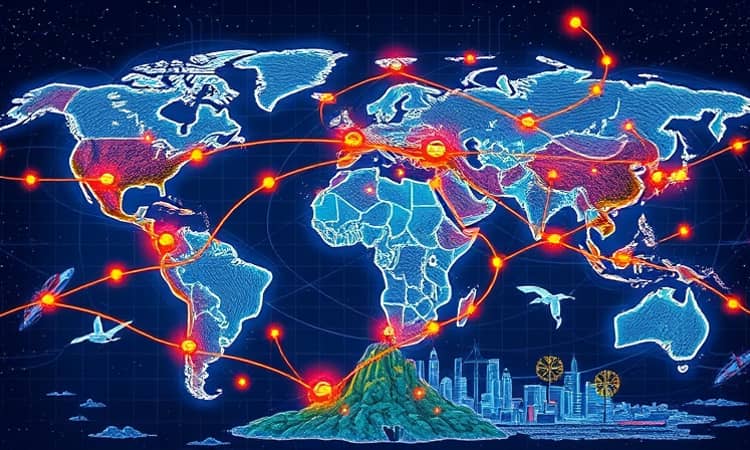
Infrastructure is the backbone of modern civilization, enabling trade, communication, and sustainable growth. Yet, a multi-trillion-dollar investment gap persists, driven by rapid urbanization, decarbonization goals, and shifting trade patterns. Addressing this shortfall requires concerted action from governments, private investors, and communities worldwide.
Global Infrastructure Needs and Investment Gaps
Leading research firms estimate that the world must mobilize at least cumulative infrastructure investment needs total $106 trillion through 2040. This sum spans seven critical sectors, including transport, energy, digital networks, social services, water, agriculture, and defense. Allianz further warns that current spending falls short by nearly 0.5% of global GDP each year, leaving a persistent gap in vital systems.
Within that overarching figure, the largest share—roughly $36 trillion—is earmarked for transport and logistics, a sector essential to moving goods and people across continents. Energy and power require $23 trillion, while digital connectivity calls for $19 trillion, underlining the centrality of data flows in the 21st century. Social infrastructure, waste management, agriculture, and defense complete the breakdown, each representing significant investment needs.
The energy transition alone demands a colossal $26–30.2 trillion by 2035, nearly 70% of total infrastructure spending. Meeting Paris Agreement targets pushes annual energy-related investments to $5 trillion by 2050, a threefold increase over current levels. Without urgent action, regions from the United States to emerging markets will face power shortages, reduced economic competitiveness, and stalled decarbonization efforts.
Connecting Continents Through Transportation and Digital Networks
Transport corridors have historically forged global connections, from ancient Silk Roads to modern shipping lanes. Today’s networks must evolve to accommodate friend-shoring, rerouted supply chains, and growing passenger volumes. The International Air Transport Association forecasts over 5 billion air travelers by 2025, while port container volumes could rise by 7%, reflecting a rebound in trade after pandemic disruptions.
- Expansion of deep-water ports and terminals
- High-speed rail corridors linking urban hubs
- Cross-border highways and logistics parks
Meanwhile, subsea fiber-optic cables, satellites, and 5G backbones form the unseen arteries of the digital age. With $19 trillion allocated for digital infrastructure through 2040, nations are racing to upgrade data centers, expand cloud capabilities, and lay high-capacity cables under oceans and deserts. This digital backbone underpins global commerce, enabling remote work, e-commerce, and real-time financial transactions across time zones.
Economic Growth, Productivity and Regional Development
Infrastructure investment yields outsized economic returns. Closing the gap could raise long-term GDP growth rates, boost productivity, and generate millions of jobs. Allianz suggests that raising total investment to 5% of GDP, with half directed toward physical systems, would support sustained productive capacity and foster structural transformation in developing and advanced economies alike.
- Sustained long-term economic growth
- Enhanced productivity through efficient networks
- Significant poverty reduction opportunities
- Greater interoperability across sectors
Urbanization is a major demand driver. By 2050, 70% of humanity will live in cities, straining transport, housing, water, and energy systems. Underinvestment could cost regions like Latin America and the Caribbean up to 15% of GDP over a decade due to bottlenecks and inefficiencies.
Emerging markets will account for two-thirds of non-energy infrastructure needs, driven by demographic growth and industrialization in Africa, Southeast Asia, and Latin America. Yet financing, governance, and technical capacity remain obstacles. Innovative partnerships are critical to translating investment pledges into roads, ports, and digital links that deliver measurable impact.
Financing, Innovation, and the Path Forward
After a dip in global FDI and project finance in early 2025, fueled by trade tensions and higher borrowing costs, the infrastructure sector is innovating to attract capital. Sustainable bonds, blended finance, and public-private partnerships are stepping in to bridge funding shortfalls. In developing economies, project finance values rose 21%, driven by large-scale ventures in energy and logistics.
- Green bonds aligned with ESG criteria
- Blended finance combining public and private funds
- Multilateral development bank guarantees
- Revenue-based project financing models
Governments can catalyze investment through clear regulatory frameworks, streamlined permitting, and targeted subsidies for climate-resilient projects. Private sector actors must embrace transparent governance, robust risk management, and community engagement to ensure equitable benefits. Civil society and local stakeholders play a key role in prioritizing projects that deliver maximum social impact.
Ultimately, closing the infrastructure gap demands vision, collaboration, and urgency. By leveraging digital innovation, renewable energy, and resilient urban design, the world can forge networks that transcend borders, uplift economies, and safeguard the planet. The choices made today will determine whether continents remain isolated by inadequate systems or become seamlessly connected engines of prosperity.
Now is the moment to act: mobilize capital, foster partnerships, and champion infrastructure projects that unlock opportunities for billions. The future of global connectivity and economic growth depends on our collective commitment to build, innovate, and invest.