As the world grapples with climate change, resource scarcity, and social inequality, the concept of growth itself is under scrutiny. Traditional economic models often equate prosperity with higher output and consumption, overlooking the long-term ecological and social costs. In response, economic growth that is environmentally sustainable and socially inclusive has emerged as a new paradigm: green growth.
This approach challenges the assumption that expanding GDP must always intensify environmental pressures. In fact, green growth rests on the principle of absolute decoupling, where economies can expand while emissions, pollution, and resource use decline. Countries like Jordan have already embedded these ideas into national strategies, aiming to enhance natural capital, reduce poverty, and bolster climate resilience.
Redefining Growth for a Green Era
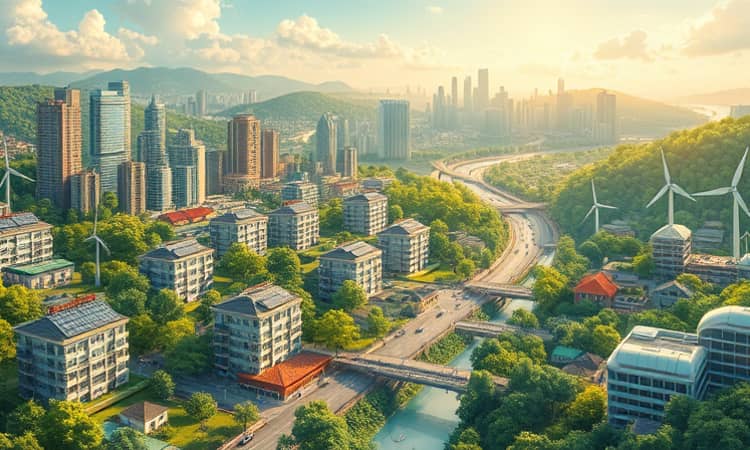
At its core, green growth reframes prosperity as the intersection of economic performance, social equity, and environmental stability. It rejects the trade-off narrative that pits development against nature. Instead, it positions ecosystems as foundational assets that require stewardship.
Implementing this vision demands rapid investment in renewable energy, energy efficiency, circular systems, and behavior shifts—from sustainable diets to low-carbon mobility. By doing so, nations can align with global goals like the Paris Agreement and the Sustainable Development Goals, ensuring that growth uplifts both people and the planet.
The Scale of the Sustainable Economy
Once relegated to niche markets, the green economy is now a major industrial powerhouse. In 2024, the global green economy topped $5 trillion in annual value, and projections indicate it will surpass $7 trillion by 2030. Since 2015, it has been the second fastest-growing industry globally, trailing only behind technology.
- Energy supply & optimization
- Transport & mobility
- Circularity & waste management
- Food, agriculture & land use
- Financial & enabling solutions
On the adaptation front, investments in climate-resilient infrastructure, water security, health systems, and biodiversity conservation are expanding rapidly. This ecosystem of solutions creates diverse entry points for investors seeking both impact and returns.
Cost-Competitive Decarbonization
Contrary to the myth that sustainability comes at a premium, analysis shows that 55% of emissions cuts needed by 2050 can be achieved through cost-competitive methods, with another 20% at only a minor cost disadvantage. This reframes the green transition as an economically rational choice.
Key competitive technologies include solar, wind, nuclear, and hydropower—already matching or undercutting fossil fuels in many markets. Together, they can address roughly 35% of the emissions reductions required to limit warming to 1.5°C. Electric vehicles, industrial efficiency upgrades, building retrofits, and biogas from waste further expand the pool of financially appealing decarbonization investments.
Sustainability as a Core Business Strategy
For companies, green growth is not just about compliance—it’s a catalyst for value creation. A global consumer survey found that 73% are willing to change their purchasing habits to lower their environmental footprints. This shift in consumer behavior unlocks new markets for sustainable products and services.
Research indicates that firms integrating sustainability into their core strategies are 1.4 times more likely to achieve major innovation breakthroughs. Meanwhile, in 2023, China funneled over $546 billion into renewable energy—demonstrating how policy and capital markets can drive sectoral transformation.
- Circular supply chains unlocking up to $4.5 trillion by 2030
- Enhanced brand loyalty and market share through green products
- Green finance tools aligning risk management with impact
Investing Across Key Sectors
Channeling capital into the right areas is essential for capturing the green growth dividend. Below are critical sectors where targeted investments can generate robust financial and environmental returns.
Clean Energy Transition
Clean energy forms the backbone of a green economy. Investments in generation, storage, smart grids, and demand management not only reduce emissions but also enhance energy security. Jordan’s national plan, for instance, targets a 14% reduction in greenhouse gases and the creation of a vibrant energy services market to spur job creation.
Transport & Mobility
Electrifying passenger and freight transport presents a massive growth opportunity. Beyond electric vehicles, investors can support charging infrastructure, battery supply chains, and smart mobility platforms, all of which contribute to lower operating costs and cleaner air.
Industry, Buildings & Infrastructure
Energy and material efficiency in factories, alongside building renovations—insulation, heat pumps, smart controls—rank among the most cost-effective decarbonization levers. Simultaneously, climate-resilient infrastructure investments protect communities from extreme weather and secure long-term economic stability.
Food, Agriculture & Land Use
Nature-based solutions, from regenerative farming to reforestation, bridge mitigation and adaptation. Investments in drought-resistant crops, sustainable irrigation, and biodiversity-friendly practices strengthen food security and safeguard ecosystems.
Circularity & Waste
Transforming waste into resources through recycling, composting, and waste-to-energy systems underpins a circular economy. Biogas production from municipal solid waste exemplifies how environmental challenges can become profitable energy solutions.
Aligning Finance with Impact
Financial innovation is pivotal for scaling green growth. Instruments such as green bonds, sustainability-linked loans, and blended finance structures mobilize private capital for high-impact projects. Digital platforms and advanced analytics enhance transparency, enabling investors to track environmental performance alongside financial metrics.
Moreover, emerging regulatory frameworks—like taxonomy standards and mandatory climate disclosures—are standardizing how impact is measured, reducing greenwashing risks and steering capital toward genuine sustainability outcomes.
Risks, Rewards & the Road Ahead
Every transition entails uncertainty. Policy changes can alter investment landscapes, technology adoption may face supply-chain bottlenecks, and market prices can fluctuate. However, the scale of opportunity outstrips these risks. Early movers gain competitive edges, shape industry norms, and can influence policy direction.
Collaboration between governments, businesses, and civil society is essential. Public-private partnerships can de-risk emerging technologies, while community engagement ensures that growth remains socially inclusive and equitable.
Ultimately, green growth is more than a technical shift—it represents a profound transformation in how we define and pursue prosperity. By embedding sustainability into every decision, stakeholders can foster resilient economies that serve both people and planet.
Conclusion: Seizing the Green Growth Dividend
The sustainable economy is no longer a distant vision—it is today’s fastest-growing opportunity. By investing strategically in renewable energy, low-carbon infrastructure, circular systems, and nature-based solutions, we can deliver robust returns, create inclusive jobs, and secure a livable planet.
Green growth offers a roadmap to a future where economic vitality, social well-being, and environmental health reinforce one another. The time to invest in tomorrow’s sustainable economy is now—so that generations to come inherit a thriving, resilient world.