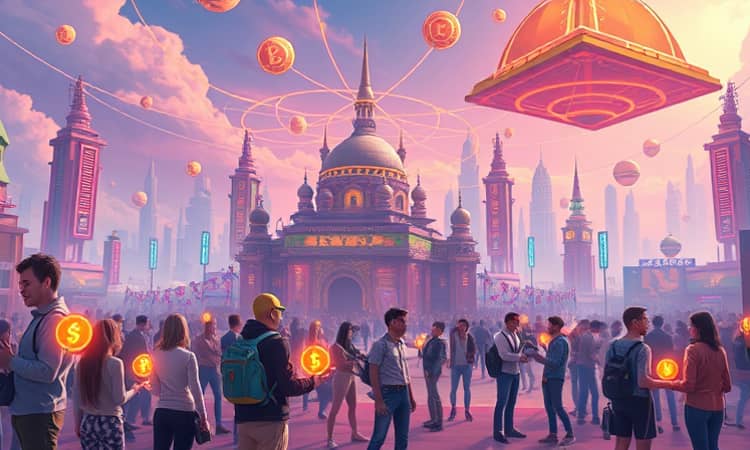
The fusion of gaming, blockchain, and decentralized finance has given rise to an era where fun and wealth creation intersect. As players worldwide explore immersive virtual worlds, they also unlock new income streams. Blockchain-based games with built-in economic incentives are redefining how we interact with digital content and financial systems.
From the earliest NFT experiments to today’s sophisticated metaverse platforms, GameFi has evolved rapidly. This article delves into its origins, mechanics, and transformative impact, offering guidance for both curious newcomers and seasoned investors.
Origins of GameFi and the Rise of P2E
Prior to blockchain integration, game economies were tightly controlled by publishers. Players invested hours and money but never truly owned their digital assets. The introduction of NFTs, with projects like CryptoKitties, broke new ground by assigning verifiable scarcity to virtual items.
In 2020 and 2021, the play-to-earn phenomenon exploded during the crypto bull market. Titles like Axie Infinity became household names in emerging markets, where players earned meaningful income. This shift illustrated how economic loops disguised as engaging gameplay could empower individuals and communities globally.
Core Mechanics and Architecture
At its heart, GameFi operates on a hybrid Web2/Web3 architecture. Graphics and immediate game logic often run on centralized servers, while token and NFT transactions are recorded on public blockchains. This dual model balances performance with transparency.
- Fungible tokens (ERC-20 or similar) serve as in-game currencies and rewards.
- Non-fungible tokens represent unique assets: characters, land plots, or rare items.
- Decentralized marketplaces enable peer-to-peer trading without intermediaries.
Developers can integrate staking, yield farming, and lending protocols directly into their game economies. By doing so, they create financial loops that mirror DeFi behavior, allowing players to earn, stake, and borrow against digital assets.
Player-Owned Economies and Interoperability
One of GameFi’s most revolutionary aspects is true digital ownership. When assets are minted on-chain, players hold verifiable proof of their items and currency. This eliminates centralized control and empowers users to move assets across games and platforms.
Interoperability, though still emerging, promises a future where a sword from one game could serve as collateral in a DeFi protocol or be displayed in another virtual world. This vision of a seamless digital economy offers exciting possibilities for cross-platform creativity and collaboration.
Economic Loops: From Play to Wealth
The typical play-to-earn cycle begins with an initial investment—often purchasing a character or asset. Players then complete quests or battles to earn tokens and NFTs, which can be sold, held, or reinvested. Developers may levy fees on withdrawals or secondary market trades, capturing value from every transaction.
- Invest in a starter pack, play daily, and earn native tokens.
- Trade rewards on open marketplaces or stake them for yield.
Advanced GameFi projects layer on lending and borrowing, allowing participants to use their NFTs as collateral. Some virtual land plots generate passive revenue through in-game activities, illustrating how digital real estate can function like rented property in the real world.
GameFi vs Traditional Gaming
Comparing legacy game models with the new financialized paradigm highlights profound differences in access, ownership, and monetization:
Success Stories and Lessons Learned
Axie Infinity stands as the poster child of P2E’s rise and volatility. Players bred and battled Axies to earn tokens that replaced or supplemented income in countries like the Philippines. However, token inflation and speculative bubbles revealed design pitfalls when growth outpaced sustainable demand.
- The Sandbox and Decentraland showcase virtual land sales and user-generated experiences, blending social interaction with monetization.
- Splinterlands and Gods Unchained demonstrate how NFT-based card games can balance skill, strategy, and secondary-market value.
These case studies underscore the need for solid tokenomics and user-centric design. Sustainable models emphasize gameplay quality first, with earning potential as a seamless extension rather than the sole attraction.
The Future of Gamified Finance
As GameFi matures, we can expect tighter integration with mainstream financial services, deeper storytelling, and richer social features. Protocols may enable cross-game asset portfolios, while DAOs give players genuine voting power over game development.
For enthusiasts and newcomers alike, this is an invitation to explore virtual worlds with both creativity and prudence. By understanding GameFi’s mechanics and risks, individuals can harness it as a tool for financial empowerment and community building.
Whether you’re a gamer, investor, or developer, the era of play-to-earn beckons. Embrace the journey with curiosity, collaborate within emerging ecosystems, and help shape a future where entertainment and prosperity go hand in hand.