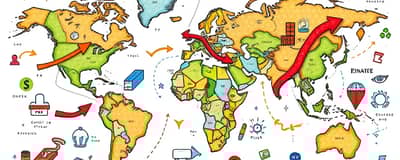
In an era when global giants once reigned supreme, a new breed of companies is rewriting the rules. These nimble ventures—micro-multinationals—are often founded by solo entrepreneurs or tiny teams and, born global from day one, tap into digital tools, cross-border networks, and a world of talent to compete on the international stage.
1. Understanding the Core Concepts
At the heart of this phenomenon lies a simple distinction: the traditional micro business versus the modern micro-multinational. Both may employ fewer than ten people, but one operates locally while the other reaches customers, suppliers, and partners across continents.
- A micro business serves local or niche markets with in-house services and modest turnover.
- A micro-multinational engages in cross-border markets, supply chains, and talent pools.
- These firms often build global networks via the Internet, platforms, and logistics partners.
2. Historical Evolution of Global Business
For much of the late 20th century, only large multinationals could afford complex supply chains, overseas offices, and massive R&D budgets. That era prioritized economies of scale and deep capital reserves. But as corporations grew, their bureaucracies slowed innovation, leaving an opening for nimbler rivals.
In the 21st century, technology has stood this formula on its head. Cloud computing, e-commerce platforms, and global logistics now let tiny teams launch products worldwide without building factories or large staffs. As Hal Varian, Google’s chief economist, observed, if multinationals dominated the last century, the next belongs to micro-multinationals.
- Economies of scale requiring heavy capital investment
- Bureaucracy and slow decision-making hampering large firms
- New platforms empowering agile, small teams
3. The Forces Powering Micro-Multinationals
Several interlocking trends make it possible for micro-multinationals to flourish. Each force reduces barriers that once favored only the largest companies and gives startups the tools to act globally from inception.
- Digital communication and collaboration tools
- Back-office platforms as a service
- Global logistics and shipping networks
- Open trade and market liberalization
- Online marketplaces and payment systems
- Access to remote talent and outsourcing
4. Characteristics That Define Success
Micro-multinationals typically feature flat organizational structures, with founders driving strategy and freelancers or contractors filling specialized roles. This network-based model keeps costs low and workflows flexible.
Operations span continents: design teams in one country, development in another, manufacturing where costs are lowest, all synchronized through cloud services. By distributing tasks across time zones—around the world and around the clock—these firms maintain continuous progress and customer support.
The market focus is often niche but global. Instead of selling locally and scaling gradually, micro-multinationals are born global, targeting high-value segments anywhere in the world through online channels and digital marketing.
5. Benefits and Competitive Advantages
Compared to both local micro businesses and large multinationals, micro-multinationals enjoy unique strengths. Their size fosters agility and rapid decision-making, while their global footprint creates cost advantages and innovation potential.
Key competitive benefits include:
- Lower fixed overheads with on-demand services
- Access to diverse, specialized talent pools
- Cost-effective manufacturing and logistics
- Continuous workflow via time-zone distribution
- Collaborative DNA and co-creation with partners
6. Economic and Policy Significance
Policy experts now recognize micro-multinationals as engines of job creation and innovation. Research shows that firm age, not size, explains much of the variation in employment growth. Young, globally oriented companies often hire more rapidly than older giants.
Governments and trade bodies are adapting regulations to support these firms—streamlining export processes, encouraging digital infrastructure, and promoting entrepreneurship. By reducing bureaucratic hurdles and investing in connectivity, policymakers can help the next wave of micro-multinationals reshape local economies.
7. Practical Guidance for Aspiring Entrepreneurs
For small firms ready to go global, success hinges on strategy, tools, and partnerships. Start by defining a clear niche abroad: research target markets, understand regulations, and map customer needs. Leverage online platforms to test demand and gather feedback.
Next, adopt a modular operational model. Use SaaS for accounting, HR, and marketing. Build a network of freelancers and service providers across regions. Partner with logistics experts to simplify shipping and compliance.
Finally, foster a global mindset. Cultivate relationships with international mentors, join virtual communities, and attend trade events online or in person. Track key metrics—customer acquisition cost, shipping times, local compliance hurdles—and iterate quickly based on real data.
By embracing digital tools, global networks, and a spirit of continuous learning, micro-multinationals can transform small dreams into worldwide impact. The future belongs to those who think beyond borders and act decisively—seize the opportunity today.