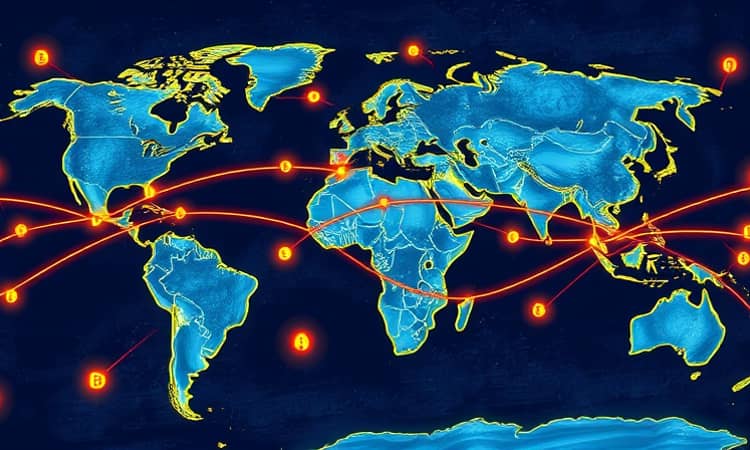
As the volume of international transactions soars past $40 trillion in 2024, cross-border cryptocurrencies are emerging as a genuine alternative to legacy banking systems. The rise of stablecoins and blockchain-based rails is reshaping how businesses and individuals move money across borders.
Market Size & Growth
Traditional cross-border payment volumes exceeded $40 trillion in 2024, with annual growth forecasts of approximately 5% through 2027. However, stablecoin transfers processed on-chain reached an astounding $32 trillion in 2024, of which around $5.7 trillion were attributed to actual cross-border commerce.
Analysts project stablecoins could capture nearly 20% of global cross-border payments by 2030, driven by double-digit adoption of programmable rails. In contrast, correspondent banking faces slower growth, multi-day settlement, and opaque fee structures.
How Blockchain Cross-Border Payments Work
At its core, blockchain cross-border payments leverage Distributed Ledger Technology (DLT) to record transactions on a shared ledger, replicated across nodes globally. Smart contracts automate payment triggers, FX conversions, and compliance checks.
- Fiat on-ramp: Customer funds a provider via bank transfer or card; funds convert to stablecoin.
- On-chain transfer: Stablecoin moves in minutes across borders, eliminating multiple intermediaries.
- Fiat off-ramp: Partner converts stablecoin to local currency; recipient receives local deposit.
This stablecoin sandwich model replaces pre-funding in multiple jurisdictions, slashing working capital requirements and settlement delays from days to minutes.
For example, a U.S. exporter paying a supplier in Mexico can settle in MXN on the same day. Traditional corridors often take 2–5 days with costly correspondent bank fees.
Advantages Over Traditional Finance
Cryptocurrency rails offer significant benefits compared to legacy systems:
- Speed & Availability: Near-instant settlement times 24/7/365 vs 2–5 business days limited by banking hours.
- Cost Efficiency: Lower fees due to fewer intermediaries; transparent blockchain network costs and FX spreads.
- Transparency & Traceability: Real-time transaction visibility on-chain with tamper-proof audit trails.
- Capital Efficiency: No need for extensive nostro/vostro accounts; reduces locked-up liquidity.
Regulatory and Policy Responses
Governments and regulators are racing to adapt policies for cross-border cryptocurrencies. Key developments include:
- United States: Enhanced AML and stablecoin reserve requirements; SEC scrutiny of issuance and trading platforms.
- European Union: MiCA framework establishing legal definitions, transparency standards, and licensing for issuers.
- Asia-Pacific: Pilot CBDC corridors between MAS, PBoC, and Banque de France; regional sandbox environments for cross-border use cases.
Regulatory clarity remains a work in progress, balancing financial integrity with fostering innovation and competition.
Risks and Limitations
Despite advantages, cross-border cryptos face challenges:
Volatility: While stablecoins aim for stability, market confidence hinges on robust reserves and transparent audits. Under-collateralized tokens pose systemic risks.
Cybersecurity: Blockchain networks and custodial platforms are targets for hacking and fraud. Secure key management and robust smart contract audits are critical.
Financial Crime: Crypto’s pseudonymous nature requires advanced compliance tools. On-chain analytics and enhanced KYC are essential to mitigate money laundering risks.
Liquidity Fragmentation: Liquidity varies across chains and jurisdictions. Deep pools in major corridors exist, but emerging markets may face higher slippage and operational complexity.
Future Outlook and Scenarios
Looking ahead, multiple scenarios could unfold:
1. Mainstream Disruption: Stablecoins and CBDCs achieve widespread acceptance in cross-border B2B, shrinking correspondent banking market share by over 50% by 2030.
2. Regulatory Consolidation: A global framework harmonizes standards, boosting adoption and ensuring financial stability, while maintaining consumer protections.
3. Fragmented Ecosystem: Divergent regulations and technical standards lead to isolated regional rails, limiting seamless global interoperability.
Regardless of the path, cross-border cryptos are set to redefine financial connectivity. Businesses and governments that embrace blockchain’s programmability and efficiency stand to benefit from enhanced capital flows and reduced operational burdens.
As stablecoins solidify their role as a disruptive rail for 2025 and beyond, the financial world faces an unprecedented opportunity: to build a more inclusive, transparent, and agile cross-border payment infrastructure for the digital age.