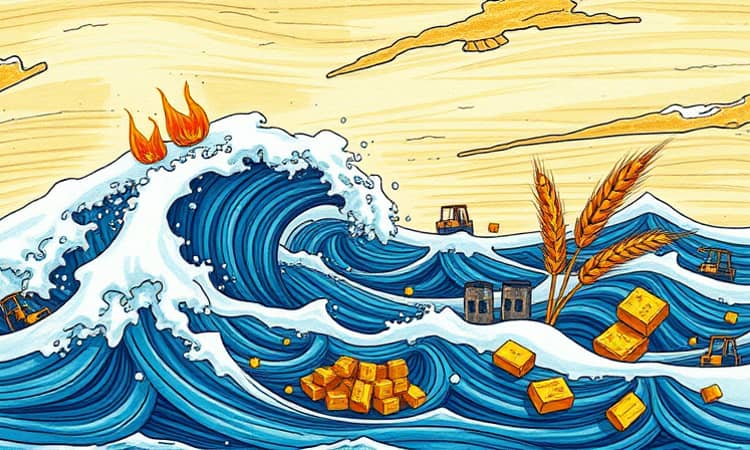
The commodity landscape has endured a historic decade of volatility, with global markets buffeted by pandemics, geopolitical conflicts, and economic upheaval. As we enter 2025, a new chapter unfolds: prices are easing or plateauing, yet each sector tells a distinct story of recovery, resilience, and emerging risk.
From the oil fields of the Middle East to the metal refineries of Asia, and the vast grain silos of North America, stakeholders are recalibrating strategies against a backdrop of evolving demand and supply dynamics. Understanding the journey to this juncture is essential for navigating the waves ahead.
Big-Picture Context: The Decade of Volatility
The 2020–2024 period registered the highest level in at least fifty years of commodity price swings. Triggered by COVID-19 lockdowns, unprecedented fiscal stimulus, and supply chain disruptions, markets spiraled into uncharted territory.
The World Bank reports that this turmoil produced dramatic knock-on effects on global growth and inflation, with prices soaring to multi-year and record highs in 2021–22 before broad-based rollovers in 2023–24 as supply responded and demand cooled under tight monetary policies.
Energy Markets: Pivot from Crisis to Glut
Energy markets have transitioned from critical shortages to signs of oversupply, reflecting changing demand and supply balances shaped by policy, innovation, and geopolitics.
Oil: From Shock to Soft Landing
Oil prices, once the leading edge of the commodity boom, are slated for a gentle decline. The World Bank forecasts a 12% drop in 2025, driven by growing supply and subdued consumption. According to the EIA, Brent crude should average around $74 per barrel in 2025, slipping to approximately $66 in 2026 as global output outpaces demand.
OPEC+ faces a strategic dilemma: maintain cuts and cede market share or lift curbs and accept lower prices. Analysts anticipate a gradual easing of quotas by mid-2025, adding to the potential oversupply.
- Downside risks: a sharper-than-expected global slowdown, tighter financial conditions, and accelerated unwinding of OPEC+ cuts.
- Upside risks: renewed geopolitical tensions, especially in the Middle East or Black Sea, and policy shifts that spur growth.
Natural Gas: A Booming LNG Year
After the 2022–23 European crisis, natural gas has shifted from regional stress to a global market. Record storage levels and mild winters tamed spot prices in 2024. However, 2025 is poised as a pivot year for liquefied natural gas, with new U.S. export capacity feeding rising demand in Asia and Europe.
The expiration of key pipeline deals raises supply uncertainties, tightening linkages between regional markets. Industrial consumption and exports to Mexico further bolster U.S. prices, while global hubs feel the licensing impact of stronger LNG flows.
Coal: Facing Structural Decline
Coal has transitioned from a post-Ukraine spike to a structural downturn. World Bank projections indicate roughly a 27% price drop in 2025, followed by moderate softening in 2026. Climate policies, renewable energy growth, and slower heavy industry activity in China represent structural headwinds for coal demand.
Industrial and Base Metals: Between Chill and Opportunity
Metals markets are balancing cyclical weakness and structural uncertainty. World Bank forecasts call for significant price declines through 2025 as global industrial output remains muted, particularly in China. Yet, the long-term trajectory still points toward rising demand for critical metals in the energy transition.
Copper: The Green Metal's Pause
Copper prices dipped into early 2025, averaging near $9,000 per tonne in the first half under base scenarios. A robust recovery is anticipated in H2 2025, fueled by non-China industrial demand and accelerating electrification trends, potentially pushing prices beyond $10,000 by late 2026.
However, trade tensions and manufacturing slowdowns could weigh on markets, underscoring a classic short-term dip vs long-term uptrend dynamic.
Steel and Iron Ore: Chronic Overcapacity
Global steel markets continue to grapple with oversupply and depressed demand. Chinese property sector woes have cut domestic consumption, yet mills have increased exports, flooding world markets and capping prices. New capacity projects globally worsen the picture, heralding persistent pressure into 2025.
Iron ore briefly rebounded on Chinese stimulus signals but remains below pre-crisis peaks, exemplifying the chronic overcapacity and depressed demand challenge.
Agricultural Commodities: Softening Food Prices
Agricultural markets, notably wheat, corn, and soybeans, followed a steep rise to record highs in 2022, driven by supply chain chaos and conflict-driven export bans. In 2024, ample harvests and eased logistics brought relief, with global food price indices falling toward pre-pandemic levels.
Looking ahead, weather variability and geopolitical shifts pose localized risks, but overall inventories are healthy. Fertilizer markets mirror this trend, retreating from peak prices as production ramps up in key regions.
Precious Metals: Gold's Enduring Luster
Gold has bucked the general commodity downtrend, buoyed by geopolitical uncertainty and central banks’ cautious policies. As real yields remain low, gold stands out, with modest price gains expected in 2025 and 2026—a beacon for risk hedging in turbulent times.
Forecast Summary
The table below summarizes major commodities’ projected price changes in 2025 and 2026 relative to current levels.
Risks and Outlook: Navigating the Next Wave
The looming question is whether markets will remain in a soft plateau or be jolted by fresh shocks. Key variables include the pace of global growth, policy shifts in major economies, and unforeseen geopolitical events that could trigger geopolitical price spikes and supply shocks.
- Monetary policy shifts and financial stability concerns
- Climate-related supply disruptions and extreme weather
- Trade policy changes affecting global flows
For investors, producers, and consumers, agility and informed risk management will be paramount. Strategies such as diversified sourcing, flexible contract structures, and hedging can help weather potential swings.
As we ride the 2025–26 price waves, understanding each commodity’s unique journey—and its broader economic implications—turns uncertainty into opportunity. The chronicles of the last decade remind us that volatility also breeds innovation and resilience. By embracing data-driven insights and proactive planning, stakeholders can navigate the shifting tides and chart a steady course through the next horizon of commodity markets.