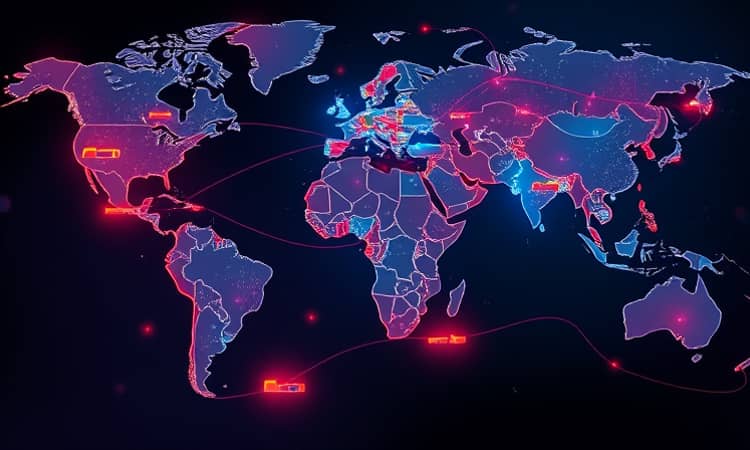
Cross-border trade is more than the movement of goods—it is the lifeblood of economies, communities, and innovation. From small businesses reaching new markets to multinational supply chains delivering essential products, the fluid exchange of goods, services, and ideas empowers societies and drives shared prosperity.
State of Global Trade in 2025
Despite rising geopolitical tensions and protectionist measures, global commerce remains robust. According to UNCTAD, global trade expanded by about $500 billion in the first half of 2025, sustaining momentum into the third quarter. Overall trade in goods and services grew by approximately 4% in early 2025, with goods trade growth edging up from 2% to 2.5% quarter-over-quarter.
UNCTAD describes this period as a testament to resilience under pressure and volatility, with businesses adapting supply chains and governments navigating policy shifts. Even as tariffs rose in major markets, services trade rebounded after a brief contraction, underscoring the dynamic nature of the global economy.
In North America, cross-border freight reached record highs. In March 2025, U.S. freight with Canada and Mexico totaled $144.8 billion—up 8.4% year-over-year and 35% above pre-pandemic levels. Trucks carried over 60% of this surface trade, with major gateways like Laredo and Detroit handling unprecedented volumes.
The Main Barriers in Cross-Border Trade
Even as trade grows, four key gaps hinder seamless exchange across borders:
- Tariffs and trade policy
- Non-tariff and regulatory barriers
- Logistics and infrastructure constraints
- Digital and data barriers
Tariffs, Protectionism, and Fragmentation
The decade-long rise in protectionist measures has introduced complexity and uncertainty. The World Bank attributes a sharp slowdown in trade growth to a long-term increase in trade restrictions, while the U.S. enacted sweeping tariff hikes in early 2025 that reverberated through global supply chains. UNCTAD warns of “global fragmentation,” where divergent trade blocs and inconsistent rules could undermine long-term economic resilience.
Sector-specific agreements have emerged as a partial remedy. The World Economic Forum highlights that targeted treaties can address complex regulatory hurdles in services more effectively than broad multilateral pacts, offering a blueprint for future negotiations.
Regulatory and Non-Tariff Obstacles
Beyond duties, exporters face a labyrinth of quotas, licensing requirements, and technical standards. The U.S. Trade Representative’s 2025 National Trade Estimate catalogues barriers from burdensome documentation to discriminatory regulations. In technology sectors, the absence of mutual recognition of conformity assessments often means companies undergo duplicate testing in every market, driving up costs and delays.
Services trade faces its own restrictions. Financial institutions, health providers, and professional firms operate under diverse licensing regimes that lack cross-border reciprocity. Building trust and cooperation among regulators remains critical for unlocking new opportunities in digital and professional services.
Logistics and Infrastructure Challenges
Physical bottlenecks at key ports and border crossings can stall commerce. In North America, reliance on trucking—trucking as the dominant transport mode for surface trade—means that congestion and capacity constraints at terminals like Laredo and Detroit have outsized impacts. Infrastructure aging and limited processing lanes exacerbate delays, while security and customs inspections add further complexity.
Geopolitical disruptions, from regional conflicts to sanction regimes, force companies to reroute shipments, stockpile inventory, or shift production. This unpredictability challenges planners and raises costs, threatening the smooth operation of global value chains.
Resilience and Growth Amid Pressures
Despite these headwinds, cross-border trade has continued to expand. Companies are diversifying supplier networks, nearshoring production, and investing in digital tools that enhance visibility across the supply chain. Collaborative platforms for real-time data sharing and digital and data exchange frameworks are empowering businesses to anticipate disruptions, optimize routes, and maintain service levels.
Adaptation is driven by both necessity and opportunity. Small and medium-sized enterprises, once on the periphery of international markets, leverage e-commerce platforms and fintech solutions to reach customers worldwide. Meanwhile, larger firms forge strategic partnerships, sharing logistics infrastructures and co-investing in resilient corridors.
Strategies and Tools to Facilitate Trade
Policymakers and businesses alike can take actionable steps to bridge existing gaps:
- Negotiating sector-specific trade agreements
- Concluding mutual recognition pacts for testing and certification
- Investing in border infrastructure and modern customs technology
- Implementing unified digital trade platforms
- Strengthening capacity-building programs for regulatory agencies
On the corporate side, strategic approaches include:
- Diversifying supplier bases across multiple regions
- Leveraging advanced analytics for demand forecasting
- Collaborating with customs brokers and logistics partners
- Investing in supply chain resilience through risk assessments
- Participating in trade facilitation networks and industry consortia
Technology plays an enabling role. Blockchain-based cargo manifests, AI-powered route optimization, and cloud-enabled customs clearance systems reduce friction and improve transparency. Digital certificates and e-documents minimize paperwork, accelerating clearance times at ports and borders.
Real-world examples illustrate these principles in action. The Port of Laredo has expanded its processing lanes and deployed automated scanning systems, cutting wait times by 30%. Meanwhile, Singapore’s digital trade hub integrates customs, transport, and banking services, demonstrating how a unified platform can drive efficiency and growth.
As global trade evolves, the imperative is clear: stakeholders must collaborate across sectors and borders. By addressing policy gaps, modernizing infrastructure, and harnessing technology, we can build a more inclusive, resilient, and dynamic trading system—one that uplifts communities, fosters innovation, and cements shared prosperity for generations to come.